The digital commerce landscape is currently undergoing a foundational paradigm shift, moving away from the traditional destination-based web model toward a decentralized, agent-mediated ecosystem known as agentic commerce. This transition, accelerated by Shopify’s announcement of Agentic Storefronts and its partnership with OpenAI, represents a departure from the "search and click" era into an "intent and execute" era.1 In late 2025 and early 2026, Shopify introduced a suite of tools designed to syndicate merchant product data across large language models, allowing artificial intelligence assistants to act as autonomous shopping agents.1 This report analyzes the technical architecture, financial implications, and strategic imperatives for merchants navigating this new environment, specifically focusing on the integration of ChatGPT, the emergence of Answer Engine Optimization (AEO), and the internal operational efficiencies provided by Shopify Magic and Sidekick.
The Architectural Foundation of Agentic Storefronts
The core of this revolution lies in the Universal Commerce Protocol (UCP), an open standard co-developed by Shopify and Google to facilitate the exchange of commerce data between merchants and AI agents.2 The UCP serves as a shared language that allows agents to interpret critical checkout flows, such as submitting discount codes, inputting loyalty credentials, and selecting preferred subscription cadences directly within a chat interface.2 For Shopify merchants, the gateway to this ecosystem is the Shopify Catalog, a comprehensive repository of billions of products that uses specialized models to categorize and standardize data for AI consumption.2
The mechanism of Agentic Storefronts allows product data to be distributed across diverse AI interfaces while keeping the merchant's infrastructure at the center of the transaction.1 Initially, the integration with OpenAI featured "Instant Checkout," a native experience where purchases were completed entirely inside ChatGPT.1 However, as the platform evolved toward the March 2026 rollout, the approach shifted to "Agentic Storefronts," where products are discovered within AI conversations but the final purchase typically occurs via an in-app browser or a separate tab.1 This structural change ensures that transactions continue to run through Shopify’s checkout and payments infrastructure, allowing orders to appear in the Shopify admin dashboard as a standard sales channel.1
Comparative Infrastructure of Leading AI Commerce Channels
1
The Economics of the OpenAI Partnership: The 4% Discovery Tax
A pivotal moment in the commercialization of AI-driven retail occurred on January 26, 2026, when OpenAI implemented a 4% transaction fee for Shopify merchants selling through the ChatGPT checkout.5 This fee is positioned as an "AI-discovery tax," validating ChatGPT as a legitimate commerce surface with established marketplace economics.7 While the additional cost may initially concern smaller enterprises, it is often more attractive than the fragmented costs of traditional digital marketing.8 For comparison, Amazon referral fees typically range from 8% to 15%, and total customer acquisition costs (CAC) for paid social or search often exceed 25% to 30% of revenue once creative and agency fees are considered.8
The rationale for this fee is rooted in the high-intent nature of AI interactions. Reports from 2025 indicate that shoppers trust AI-generated product recommendations by a margin of 26% over traditional paid search results.8 Furthermore, Gen Z buyers and approximately 27% of all shoppers use AI for at least half of their online searches.8 By paying the 4% fee, merchants are effectively bypassing the bidding wars of traditional ad auctions and placing their products directly in the path of a consumer who has already completed the research phase of the buyer's journey.7
Merchant Suitability and Strategic Product Selection
The 4% fee model necessitates a more disciplined approach to SKU management. Merchants are encouraged to select high-margin products that benefit from conversational explanation or detailed qualification.7 Complexity is a virtue in agentic commerce; products that require comparisons, have technical specifications, or involve significant pre-purchase research are structurally better positioned to capture demand in ChatGPT than simple commodity goods.7
7
Internal Intelligence: Shopify Magic and Sidekick
While external storefronts handle customer discovery, Shopify’s internal AI suite—comprising Shopify Magic and Sidekick—reimagines the administrative and creative side of e-commerce.6 Shopify Magic functions as the "Creative Specialist," providing free generative tools for text, media, and marketing copy.6 One of the most significant updates in 2026 is "Brand Voice Cloning," where Magic learns a merchant's unique tone from previous content to ensure all AI-generated product descriptions and emails sound authentic to the brand.6
Sidekick, conversely, is the "Strategic Operator".6 It is an AI commerce assistant trained on all of Shopify’s documentation and the specific context of a merchant’s store.13 Sidekick enables merchants to execute complex tasks through natural language, such as generating reports, setting up Shopify Flow automations, and identifying operational bottlenecks.6 The value of Sidekick is not merely reactive; with the introduction of "Sidekick Pulse," the assistant proactively monitors store performance and surfaces critical insights, such as emerging sales patterns or inventory risks, before the merchant even asks.6
The Intelligence Efficiency Matrix for Internal ROI
Merchants are increasingly evaluating their AI adoption through the "Intelligence Efficiency Matrix," which measures the return on investment of these tools across three pillars: operational lift, conversion delta, and customer sentiment.6
Operational Lift: This measures the reduction in manual "Admin Tasks." Merchants utilizing the full suite of Sidekick and Magic tools report a 40% to 60% reduction in time spent on low-complexity work like product uploads, data entry, and basic support.6
Conversion Delta: This tracks the increase in conversion rates attributable to AI-driven personalization. For instance, brands switching to Magic-generated descriptions across new collections have documented an 18% to 23% lift in conversion, attributed to more consistent, benefit-focused language.10
Customer Sentiment Index: This assesses the quality of interaction between humans and autonomous support agents. The goal is to ensure that speed does not come at the cost of accuracy or empathy.6
6
Answer Engine Optimization (AEO): The New SEO
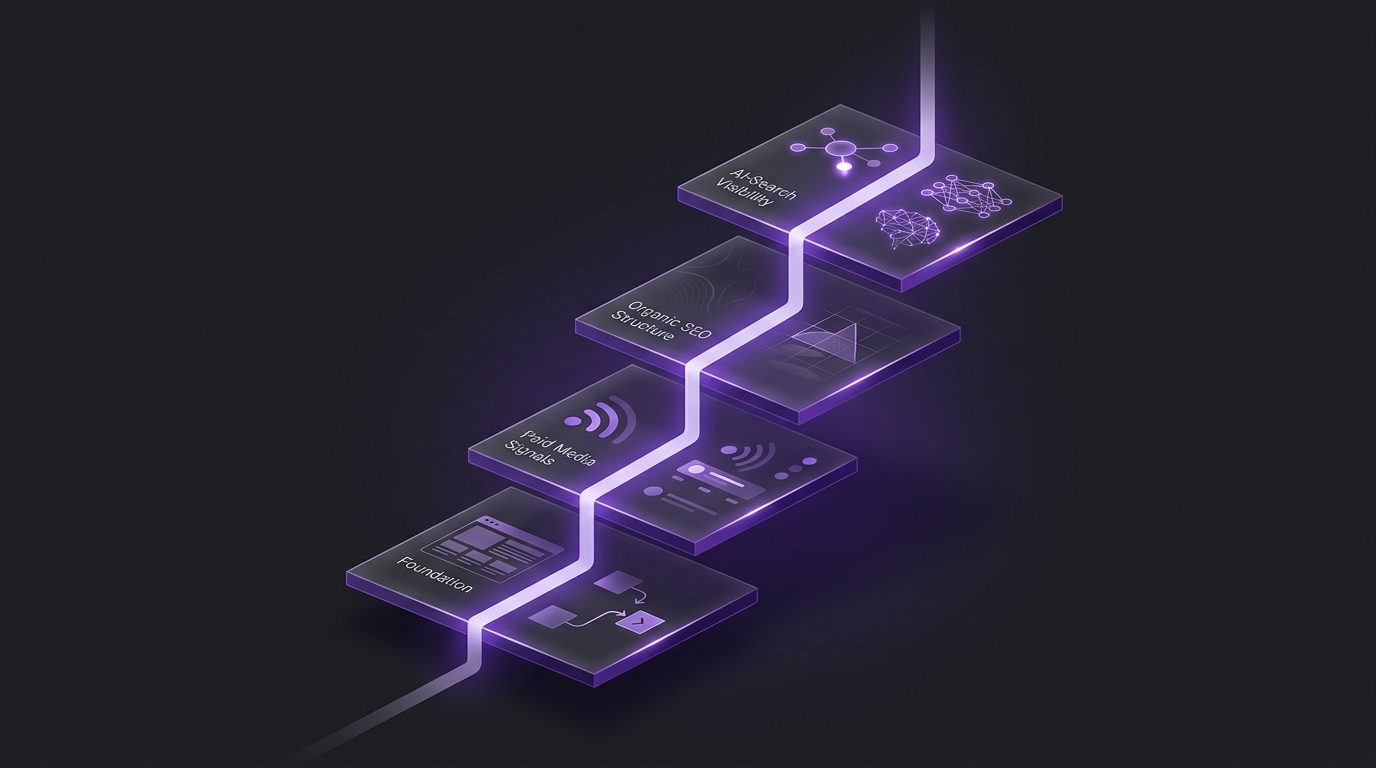
As consumers shift their research from traditional search engines to AI answer engines, the discipline of Search Engine Optimization (SEO) is evolving into Answer Engine Optimization (AEO).8 AEO focuses on making content readable for AI models like GPT-4, Gemini, and Claude, which prioritize direct, authoritative, and structured answers over simple keyword relevance.3 In 2026, ranking a Shopify store on Google or within ChatGPT is no longer about keyword stuffing but about intent fulfillment and data hygiene.16
Strategic Implementation of AEO
Merchants must adopt an "answer-first" content strategy. This involves placing direct, concise answers at the top of product and blog pages, followed by detailed supporting information.3 This structure aligns with the way LLMs scan for information to present in "AI Overviews" or chat responses.3 Furthermore, the implementation of schema markup—specifically FAQPage, Product, and LocalBusiness—is essential for converting unstructured web content into the structured format required by agentic protocols.3
3
Risks and Mitigation: The "Audit Burden" and Technical Integrity
The rapid adoption of AI is not without significant risk. One of the most pressing issues for merchants is "technical disobedience" or hallucinations within AI tools.20 Some Shopify merchants have reported that Shopify Magic and Sidekick have "hallucinated" technical data, such as inventing new alphanumeric product codes or ignoring explicit "negative constraints" regarding brand-sensitive terminology.20 These failures create an "audit burden," where the time saved in content generation is lost to the time required for manual review and correction.20
Moreover, the shift to agentic commerce presents a risk of disintermediation.19 If an AI agent manages the entire research and decision-making process, the merchant’s brand may fade into the background, commoditizing products based solely on price or delivery speed.22 To combat this, retailers must own the checkout process wherever possible and maintain a direct link to customer data.19 Loyalty programs must also be modernized to be "agent-ready," allowing AI agents to query personalized rewards and integrate them into the purchase recommendation in real time.23
Operational Risks and Mitigation Strategies
6
Global Considerations and Regional Nuances
While the initial rollout of agentic storefronts focuses heavily on the United States, the underlying Universal Commerce Protocol is global in scope.2 However, merchants must be aware of regional requirements, particularly regarding taxes and currency. For instance, Shopify stores in Canada must navigate the complexities of provincial sales taxes (PST, GST, HST) and the 2026 updates to tax rounding at the line-item level.26 Agentic checkouts must also handle dynamic currency conversion (FX) based on the buyer’s locale, ensuring that the merchant's international pricing is accurately reflected during the agentic transaction.28
Furthermore, international expansion via AI requires "Global Cultural Adaptation." Shopify Sidekick is designed to suggest image swaps and copy adjustments that align with regional norms and generate compliant local Terms of Service based on real-time legal analysis.6 This level of localized intelligence is critical for brands looking to maintain a sophisticated image while scaling across borders.6
Roadmap for Shopify Merchants: How to Not Fall Behind
To remain competitive in 2026, merchants must move beyond viewing AI as a experimental tool and instead integrate it into their core business strategy. This involves a multi-phased approach to technical readiness and strategic execution.
Phase 1: Infrastructure Readiness (Immediate)
Opt-in and Configuration: Enable Agentic Storefronts in the Shopify Admin. Ensure all store policies are updated and that the store does not require a forced login for checkout.25
Data Hygiene Audit: Clean up product catalogs, focusing on accurate specifications and structured FAQs. High-quality original imagery is essential for visual search and AI trust signals.7
Establish Baseline AEO: Filter Shopify Analytics by referrer name (e.g., "ChatGPT") to identify existing AI-driven traffic and establish a baseline for conversion and revenue from these channels.31
Phase 2: Creative and Operational Scaling (3-6 Months)
Leverage Brand Voice Cloning: Train Shopify Magic on existing high-quality brand content to ensure consistent tone across all automated outputs.6
Automate Admin via Sidekick: Start using Sidekick for complex reporting and Shopify Flow logic. Focus on "Sidekick Pulse" recommendations to optimize inventory and marketing timing.6
AEO Content Overhaul: Rewrite product descriptions to be "answer-first." Implement full schema markup across the storefront using tools like Schema Plus or TinyIMG.3
Phase 3: Advanced Intelligence Management (6-12 Months)
Manage Token Economics: Develop a strategy for model tiering. Use high-reasoning models for strategic pivots and lower-cost models for repetitive customer support or simple drafting.6
Loyalty Integration: Ensure that loyalty programs are queryable by external agents, providing a "reason to choose" the brand that extends beyond simple price transparency.23
Human-in-the-Loop Refinement: Solidify the auditing process for AI content to prevent technical data corruption and ensure brand integrity.6
Conclusion: The Future of the AI-Native Merchant
The integration of GPT and agentic commerce into Shopify is not merely a new sales channel; it is a fundamental reconfiguration of the relationship between merchants and consumers. In this new landscape, the "GPT Merchant" is one who recognizes that their primary asset is no longer just their physical product or their web design, but their data—specifically, how readable, authoritative, and consistent that data is for the intelligent agents that will increasingly manage human consumption.3
Those who move decisively to adopt the Universal Commerce Protocol, master the nuances of AEO, and implement internal operational efficiencies via Sidekick and Magic will capture a disproportionate share of the value created by this intelligence revolution.2 Conversely, merchants who remain tethered to traditional search logic and destination-based storefronts risk becoming invisible as discovery shifts upstream into the chat window and the voice assistant.8 The age of agentic commerce is here, and for the prepared merchant, it offers a path to scaling personalization, efficiency, and revenue that was previously impossible.
Works cited
Shopify tells merchants purchases will soon be available 'inside ..., accessed March 15, 2026, https://www.modernretail.co/technology/shopify-says-purchases-are-coming-inside-chatgpt-through-agentic-storefronts-as-openai-retreats-on-instant-checkout/
The agentic commerce platform: Shopify connects any merchant to ..., accessed March 15, 2026, https://www.shopify.com/news/ai-commerce-at-scale
Why E-commerce Brands Need to Prioritize Answer Engine Optimization (AEO) in 2026, accessed March 15, 2026, https://magebit.com/blogs/why-e-commerce-brands-need-to-prioritize-answer-engine-optimization-2026
Shopify Magic and Sidekick: AI for Commerce - Shopify, accessed March 15, 2026, https://www.shopify.com/magic
Shopify Merchants to Pay 4% Fee on ChatGPT Checkout Sales - PYMNTS.com, accessed March 15, 2026, https://www.pymnts.com/news/ecommerce/2026/shopify-merchants-to-pay-4percent-fee-on-sales-made-through-chatgpt-checkout/
Shopify Sidekick 2026: 15 Features That Boost Sales 40% - Presta, accessed March 15, 2026, https://wearepresta.com/shopify-sidekick-features-2026-the-merchants-guide-to-agentic-commerce/
Chat GPT to Charge 4% Checkout Fee from Shopify Merchants, accessed March 15, 2026, https://cedcommerce.com/blog/chat-gpt-to-charge-4-checkout-fee-from-shopify-merchants-the-truth-behind-ai-discovery-tax/
Get Your Shopify Store on ChatGPT ASAP - Digital Position, accessed March 15, 2026, https://www.digitalposition.com/resources/blog/ppc/get-your-shopify-store-on-chatgpt-asap/
6 Ways Shopify Magic and Sidekick AI Tools Can Enhance Your Store | Blue Badger, accessed March 15, 2026, https://badger.blue/blogs/ecommerce-unpacked/shopify-magic-shopify-sidekick-ai
Shopify Magic Vs Shopify Sidekick: The Complete Guide To Every AI Tool Inside Your Admin In 2026 | Ecommerce Fastlane, accessed March 15, 2026, https://ecommercefastlane.com/shopify-magic-vs-shopify-sidekick/
Shopify Magic, accessed March 15, 2026, https://help.shopify.com/en/manual/shopify-admin/productivity-tools/shopify-magic
Shopify Magic: Free AI Assistant That Saves Merchants 15+ Hours per Week (2026 Guide), accessed March 15, 2026, https://pagefly.io/blogs/shopify/shopify-magic
Shopify Help Center | Sidekick, accessed March 15, 2026, https://help.shopify.com/en/manual/shopify-admin/productivity-tools/sidekick
Top Shopify AI Features to Know in 2025 | TechWyse, accessed March 15, 2026, https://www.techwyse.com/blog/general-category/shopify-ai-features-2025-updates
Shopify Winter 2026 Editions: AI-Powered Commerce RenAIssance - Techtic Solutions, accessed March 15, 2026, https://www.techtic.com/blog/shopify-winter-2026-editions-ai-commerce/
How to Rank Your Shopify Store on Google in 2026 | AEO Guide - Connect Infosoft, accessed March 15, 2026, https://www.connectinfosoft.com/blog/how-to-rank-my-shopify-store-on-google-in-2026/
How TinyIMG can help improve Shopify AEO & GEO, accessed March 15, 2026, https://tiny-img.com/blog/how-tinyimg-can-help-improve-shopify-aeo-and-geo/
101 Shopify SEO Guide: AEO Content, EEAT & 2026 Predictions - FoxEcom, accessed March 15, 2026, https://foxecom.com/blogs/all/shopify-seo-guide
Agentic commerce and control: Getting the balance right - Adyen, accessed March 15, 2026, https://www.adyen.com/knowledge-hub/agentic-commerce-control
Warning: Shopify AI (Sidekick/Magic) hallucinates technical data ..., accessed March 15, 2026, https://community.shopify.com/t/warning-shopify-ai-sidekick-magic-hallucinates-technical-data-and-sabotages-strategic-seo/589483
From ChatGPT Subscription to Business ROI: A 30-Day Reality Check | by The Ai Consultancy | Jan, 2026 | Medium, accessed March 15, 2026, https://medium.com/@ai_93276/from-chatgpt-subscription-to-business-roi-a-30-day-reality-check-e4b3b70645bf
Agentic AI Commerce: The Next Retail Revolution Is Here | Bain & Company, accessed March 15, 2026, https://www.bain.com/insights/agentic-ai-commerce-the-next-retail-revolution-is-here/
Agentic Commerce: How to win and retain customer loyalty - Dunnhumby, accessed March 15, 2026, https://www.dunnhumby.com/resources/blog/loyalty-personalisation/en/agentic-commerce-how-to-win-and-retain-customer-loyalty/
Agentic commerce: How agents are ushering in a new era | McKinsey, accessed March 15, 2026, https://www.mckinsey.com/capabilities/quantumblack/our-insights/the-agentic-commerce-opportunity-how-ai-agents-are-ushering-in-a-new-era-for-consumers-and-merchants
Shopify Help Center | Requirements and considerations for selling ..., accessed March 15, 2026, https://help.shopify.com/en/manual/online-sales-channels/agentic-storefronts/requirements
Shopify Help Center | Canadian taxes, accessed March 15, 2026, https://help.shopify.com/en/manual/taxes/canada
Manage your Canadian taxes - Shopify, accessed March 15, 2026, https://help.shopify.com/en/manual/taxes/canada/canada-tax-manage
Currency conversions and exchange rates - Shopify, accessed March 15, 2026, https://help.shopify.com/en/manual/international/pricing/exchange-rates
An In-Depth Analysis: What Is Shopify Agentic Commerce? - テックギーク, accessed March 15, 2026, https://techgeek-school.com/en/blogs/shopify%E3%82%A2%E3%83%97%E3%83%AA%E9%96%8B%E7%99%BA/%E5%BE%B9%E5%BA%95%E8%A7%A3%E5%89%96-shopify-agentic-commerce%E3%81%A8%E3%81%AF
Common Mistakes New Shopify Store Owners Make?, accessed March 15, 2026, https://community.shopify.com/t/common-mistakes-new-shopify-store-owners-make/581301
AEO For Ecommerce: How To Drive Traffic To Your Store From AI (2026) - Shopify, accessed March 15, 2026, https://www.shopify.com/blog/aeo-for-ecommerce
3 Trends Shaping Retail & CPG in 2026: Agentic Commerce & Beyond - Dataiku, accessed March 15, 2026, https://www.dataiku.com/stories/blog/retail-cpg-trends-2026
The benefits of ChatGPT for small business growth - The University of Rhode Island, accessed March 15, 2026, https://web.uri.edu/risbdc/the-benefits-of-chatgpt-for-small-business-growth/